Meet the Roster: Chloe Lukas

Vibrant, whimsical, compelling, and quietly obsessed with turning the ordinary into something you can’t stop looking at.

Chloe Lukas is Toronto-based, but her eye is always in motion. She shoots across product, lifestyle, food, and fashion, and her work has a signature quality that’s hard to fake: colour that feels intentional, moments that feel present, and images that don’t look overworked even when the craft is doing a lot.

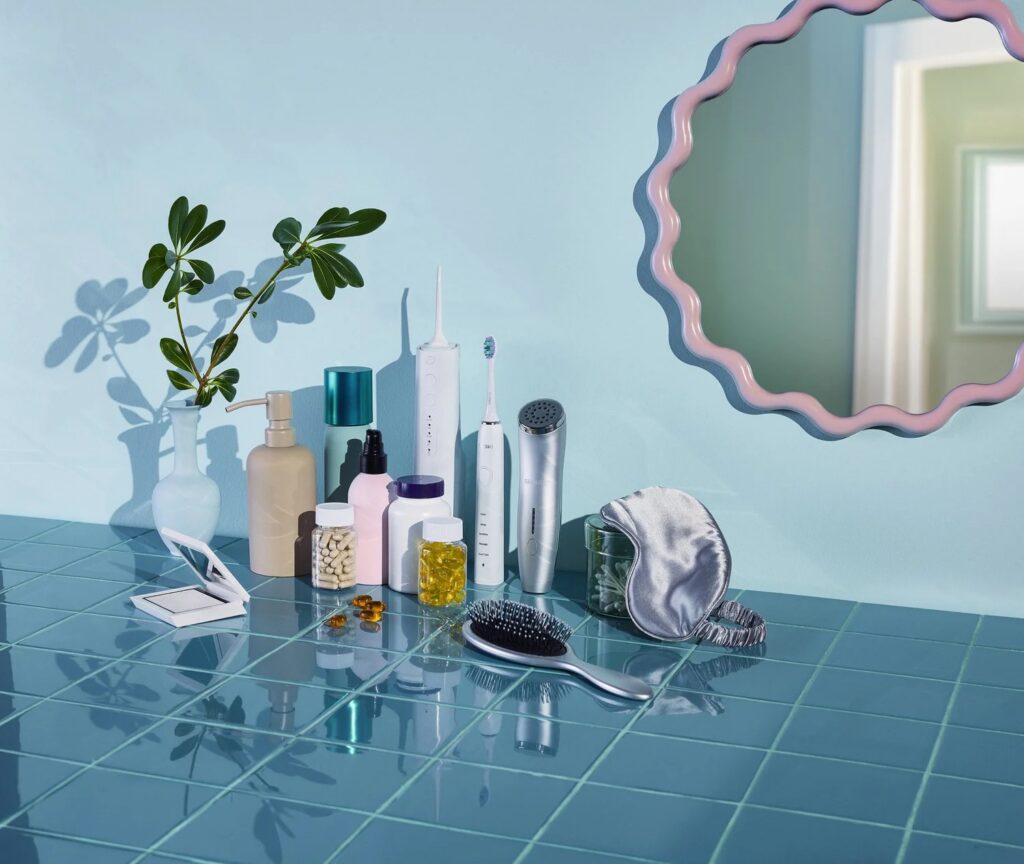
Skincare and wellness product still life on glossy blue tile with electric toothbrush, water flosser, supplements, hairbrush, satin sleep mask, plant, and wavy mirror.


If you’ve ever wondered what separates a nice photo from an image that actually sticks, Chloe has a simple answer. It’s not the object. It’s the feeling you manage to pull out of it.

“I’m always chasing beauty. The kind that can transform something seemingly ordinary into something evocative and captivating.”

We want to introduce Chloe in her own words, highlight notes on what she’s chasing, and how she gets her work to shine:

The Chloe Lukas Quick-Fire

Where are you based?

Toronto.

What do you want to be hired for most right now?

Product, lifestyle, food, fashion. The list could go on because I want to shoot it all.

Three words that describe your work?

Vibrant, whimsical, compelling.

Colorful still life scene with coffee cups, citrus fruit, lime slices and flowers on a bright tiled kitchen table

What are you always chasing in an image?

Beauty that transforms something ordinary into something evocative and captivating. What excites me most is the exploration itself. Through collaboration with a creative team, I love uncovering unexpected details, moods, and moments.

What do you do to keep the work feeling human, not overworked?

I’m drawn to work that still carries a sense of spontaneity, where the viewer can feel the presence of the people, the setting, and the moment itself.

Describe a photo you’re proud of. What makes it work beyond “it looks good”?

An image I’m especially proud of comes from my Demure series. It was captured during an emotionally difficult time for my family. At golden hour, we walked through my aunt’s fields, attempting to soften the heaviness we were carrying. This image is a testament to the deep connection I share with my family and to their generosity in supporting my art, even in moments of vulnerability. It represents not only grief, but also tenderness, trust, and the quiet act of being held by both nature and the people around us. It will always remain one of my proudest moments as a photographer.

Chloe Lukas subject in a pale blue dress lying in tall green grass at golden hour, lifestyle editorial photography

What inspires you outside of photography?

Nature, everyday life, and the people around me. A lot of it comes from simply observing the world we live in: light changing through the day, quiet moments, loud moments, conversations, movement, stillness, emotion. My inspiration comes from real life experiences, travel, relationships, and the small details people often overlook.

What do you hope someone feels when they see your work?

I want my work to slow the viewer down for a moment. I want to make them feel nostalgic, intrigued, comforted, excited, or even puzzled. I strive to create imagery that’s visually striking; work that captures attention, reinforces brand identity, and leaves a lasting impression. I also hope my work feels human and not overly perfected, but rather honest and grounded. Even in commercial work, I think people connect most with imagery that feels real.

Pilot Coffee Roasters “Ruby” coffee bag styled in a bold red and blue set with translucent red panels and citrus peel props.

Your go-to reset when you’re stuck?

Visiting my Oma and Opa. They have a way of slowing the world down for me and always bring a sense of ease, understanding, and support. That said, these ninety-eight-year-olds have surprisingly busy social schedules, so my backup options are camping or heading to the beach. From fall through spring, you can usually find me at the pool, on a ski hill, or somewhere crafting.

What we love about Chloe’s approach

A lot of photographers can make something look good. Chloe is more interested in making it feel like something. Her answers all point to the same thing: she’s not chasing polish for polish’s sake. She’s chasing presence. Whether it’s a product set, a lifestyle moment, or a fashion frame, she’s looking for the small cues that make an image believable.

Chloe Lukas makes vibrant, whimsical images that still feel grounded in real life, even when the concept is elevated.

Want to see more? Explore Chloe’s work on her United Assembly roster page, and keep an eye out for upcoming features and new work drops.

Explore Chloe Lukas’s work on the UA roster and inquire for availability. For more from Chloe, check out her features on the UA Instagram or follow her directly on Instagram for the latest.

Licensing 101: A Beginner’s Guide to Using Photos Legally (Without Getting Burned)

If you’ve never dealt with licensing before, here’s the simplest way to think about it: buying a photo is not the same as owning it.

In most commercial photography, the artist keeps ownership, and the client purchases a license (permission) to use the images in specific ways. This guide breaks down the basics for both clients and artists in plain language.

1) What is licensing (and why does it exist)?

A license is a written permission that answers one question: “How can these images be used?”
It protects both sides:

  • Clients get clarity (no surprises, no takedown requests, no awkward “are we allowed?” moments).
  • Artists protect their work from being used beyond what was agreed (especially when images end up in ads, new markets, or evergreen brand libraries).

Think of it like renting a space: you can use it, but you don’t automatically own it forever.

2) Ownership vs. usage rights (the one thing people mix up)

Here’s the core difference:

  • Copyright / ownership: who legally owns the images (usually the photographer/artist).
  • Usage rights / licensing: what the client is allowed to do with the images.

Most of the time, brands are not buying “the photo forever,” they’re buying permission to use it for a specific purpose.

Exception: Sometimes a contract is work-for-hire or includes a full buyout (ownership transfers or usage is extremely broad). That can be valid but it should be explicit, and it usually costs more because the artist is giving up long-term value.

3) The 5 licensing basics (with simple examples)

If you’re new, these are the five terms that matter most:

Usage (where it will appear)
Example: “Instagram + website” is different from “paid ads + billboards + retail displays.”
Wider usage = more value = usually higher licensing fee.

Duration (how long you can use it)
Example: 3 months vs 12 months vs “in perpetuity” (forever).
Longer duration usually costs more because the images keep working for the brand.

Territory (where you can use it)
Example: Canada-only vs North America vs global.
More territory = more audience = more value.

Exclusivity (does the artist have to avoid competitors?)
Example: A skincare brand may want the images (or the artist) not used by another skincare brand for 6–12 months.
Exclusivity can be powerful, but it must be clearly defined.

Deliverables (what you actually receive)
Example: “15 final selects + 5 crops + 2 cutdowns” vs “all raws.”
If it’s not written down, expectations drift.

Conclusion

Licensing is not red tape, it’s what turns creative into clean business. When usage, duration, and territory are clear, projects run smoother, budgets make sense, and the relationship stays healthy. Whether you’re the client or the artist, the goal is the same: clarity upfront so everyone can focus on making great work.

Not sure what terms you need? We can help you scope licensing and usage before shoot day so there are no surprises later.

What United Assembly Does (And How We Work)

United Assembly is built on taste, relationships, and intentional creative work. We represent a curated roster of photographers and directors and we support the production behind the work so it lands cleanly in the real world.

1) We represent talent with intention

UA isn’t trying to be everything for everyone. We’re building a roster that’s distinct, consistent, and culturally fluent. We look for artists who can hold a concept, execute under pressure, and still make the work feel alive. Curation is the point. It protects quality, clarity, and the kind of long-term partnerships we care about.

2) We support production end-to-end

Great work isn’t just a final image, it’s the chain of decisions that gets you there. UA helps align the brief, match the right artist to the right job, and bring structure to the moving parts: timelines, crew, usage/licensing clarity, approvals, and delivery. When the system is strong, the creative stays free.

3) We care about follow-through as much as taste

Taste gets attention. Follow-through builds trust. We keep communication clear, scope clean, and details protected because that’s what makes shoots feel calm and what makes clients come back. The goal is simple: work that feels effortless on the outside because it was handled properly on the inside.

Conclusion

UA exists to champion artists and make production feel steady so the work can stay human, intentional, and culturally relevant.

If you’re building a campaign, launching a product, or planning a shoot: tell us what you’re making and we’ll match the right talent and support the process.